Quintel Blogger theme

A free Premium Blogger theme.

Showing posts with label DISH. Show all posts

Thursday, June 27, 2013

DISH Folds & Some DISH Options

Poker 

As the long multi-hand poker game with Sprint, DISH, Softbank and Clearwire dragged on with DISH upping the ante, forcing Sprint and Softbank to push, DISH folded on both deals in the end.

DISH's game to takeover Sprint ended on June 18, 2013 when they withdrew their offer. The press release language implied that they will devote their resources to win Clearwire. It didn't look bad when the Clearwire board recommended DISH's offer back on June 12. 
But with a higher Sprint offer on June 20, the coup de grace came several days later on June 24 when the Clearwire board reversed its DISH recommendation for Sprint's offer.  


DISH folded on its second poker hand with yesterday's June 26 announcement. Many including me, expected another run, upping the ante, given DISH's playing profile but what did it have to gain? Really - nothing.

DISH's Options

The near term scenario is that DISH needs to get service up and running. Any time you're delayed means lost future revenue opportunity. With its core business slipping, there is urgency to get into the mobile space. Given this line of thought, it needs to bury the hatchet with Sprint and move to spectrum hosting.

A long term scenario is that DISH can wait until an alternate hosting provider comes on line. T-Mobile has been bandied about as that partner.  But why not Verizon Wireless and AT&T? Everyone wants access to new spectrum and if the deal is right, anything is possible. 

Regardless of scenario, DISH and a partner(s) need to seed the mobile ecosystem on DISH's bands. Technically, it may not be a stretch. However, the lead times to quickly  create/productize the chipsets and integrate into production hardware (device and infrastructure) are still an issue. Once it joins the mobile service provider club, DISH can upsell its own customers on mobile broadband (either fixed or mobile) and wholesale its capacity.  

Looking ahead, DISH is looking for another game but it may not be poker. 


Friday, June 21, 2013

The Finish Line is Close for Sprint

No one expected the level of drama and the maneuverings among Sprint, Clearwire, Softbank and DISH. To be sure, the stakes were high for all parties. A poker game analogy is appropriate as this corporate soap opera has seen its share of raised bids and stare downs.


DISH with Charlie Ergen at its helm played the classical disruptor, raising the stakes on its bid on both Sprint and Clearwire. It's logical since the DISH core business is sliding and DISH has no access to any mobile opportunities (revenue).  Though DISH has its own spectrum, it doesn't have the ability to launch service on its own. With Sprint's Network Vision strategy, DISH can ride the Sprint host with lower capital expenditure than if it built a network from scratch. But Sprint has a revenue generating subscriber base and direct sales channels that DISH can tap into if it own Sprint.  However, with a deeper pocketed Softbank raising the ante, DISH needed to fold and focus on a less capital intensive deal - Clearwire.

However, Sprint "pulled a DISH" and raised its bid for Clearwire at the last minute $5/share vs $4.40.  This reversed a Clearwire board recommendation for DISH. Let's face it, money talks and with that, the activist investors were placated. After all, they were looking to maximize any bid anyway. What didn't hurt was Sprint's lawsuit against DISH and Clearwire citing the illegality of the DISH offer.   Sprint is near the finish line to realize 100% ownership of Clearwire, unless DISH "pulls another DISH." 

The real question if the Sprint-Clearwire deal makes it is what are DISH's options to get into the mobile space and monetize its spectrum? Will Sprint and DISH bury the hatchet? In my view, they have to. DISH still needs to make use of its spectrum and Sprint is the logical partner (at this moment) since Network Vision was created for spectrum hosting. Though Sprint said in the past, wholesale revenue wasn't totally baked into the Network Vision model, any wholesale money (a fleeting LightSquared) will help its return on investment. Of course DISH can court T-Mobile, but they're focusing on its own LTE buildout. Moreover, they haven't planned for spectrum hosting. We shall see............. 


Wednesday, December 12, 2012

DISH Has Terrestrial Approval - now what?!

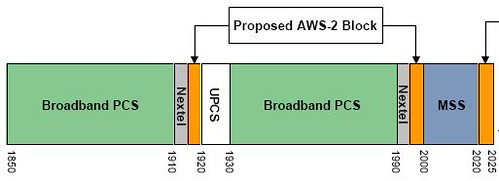
Now that the FCC has approved terrestrial use of DISH's 40 MHz of spectrum (2000-2020 MHz and 2180-2200 MHz), what are its options?


1. Build it out - it's capitally intensive to build out a national network so a wireless carrier partner is necessary.  Why a carrier? It's in their core competency to implement and run networks.  Sprint is in the best position to meet DISH's wireless buildout goal with its Network Vision (spectrum hosting capability) strategy.  Stating the obvious - having a carrier such as Sprint host allows DISH to bring services up quickly and minimize a huge self-built price tag.

2. Sell the spectrum - getting money in the short term is always desirable.  But as the industry has seen, spectrum will always appreciate.  Yet there's been precedence for this. Spectrum Co (cable companies) sold its AWS spectrum to Verizon Wireless. They realized an appreciation in the base price from when they bought it in 2006.  More important aside from the money, cable companies (Cox, Comcast, Bright House and Time Warner) has strategic wireline and wireless possibilities with Verizon/Verizon Wireless.  With this in mind, DISH could cut a sale deal and wholesale at favored rates from the buyer. Presumably, the spectrum buyer will be a wireless carrier. Sprint would make the most sense.

BUT........
 
Don't forget the devices that will run on the DISH spectrum. Device and chip makers haven't exactly created product yet to meet this need. There is a ramp up time to incorporate it into the product portfolios. It doesn't happen overnight - look at the time in which Sprint/Clearwire announced TD-LTE 2.5 GHz support to when devices will have that band and technology incorporated.  This is a factor in both the above scenarios.

Let's see what DISH does......... 

Monday, December 10, 2012

Why Sprint + DISH Makes Sense

Today's Bloomberg report  suggesting a possible deal where Sprint hosts DISH's spectrum is logical. While DISH has held this spectrum for some time, they have yet to throw services on it. DISH needs a mobile component as all their fixed line rivals (e.g., AT&T, Verizon and Cable Cos) have or will have mobile capability.  The media and industry speculation with Google in mid-November has yet to materialize.

Keeping Up with Competitors

From a fixed line view, these competitors are pushing for subscribers being able to access content in any device (i.e., smartphones, tablets, PCs, TVs, cars?). Of course the service provider will love to upsell an alternate access medium to customers. While DISH is a capable satellite provider, it has little experience in the terrestrial side. A national buildout of their MSS spectrum would be capital intensive and outside of their core competency. 

Enter Sprint

Sprint's big bet in their 2010 Network Vision strategy that hosting spectrum would be an element of its wholesale strategy. There was much promise as then cable company (SpectrumCo)  partners had a near national AWS footprint and Clearwire needed a platform to expand to new markets. So far, only the nearly defunct LightSquared was the only shortlived spectrum hosting deal. Therefore, any spectrum holder who needed to bring up service is fair wholesale game.  With the Softbank cash infusion,  Sprint has publicly stated that it has the flexibility to do more things.  Aggressively courting DISH and hosting MSS spectrum should be a no-brainer despite any previous tension on MSS spectrum interference with with Sprint PCS operation.

Possibilities

It's an inevitability that MSS will run LTE. If MSS bands were to increase Sprint's LTE capability beyond their 5X5 channel implementation, a wider LTE band helps Sprint LTE capacity allowing Sprint's Unlimited data proposition to extend. Speed is another factor in which channels can be aggregated to provide a fatter LTE pipe.  

A DISH deal allows for a long term alternative (and a lever) to being locked in with Clearwire's TD-LTE. At a minimum, a DISH+Sprint PCS/MSS LTE pipe complements  any data offload.

Friday, November 16, 2012

Building a National Wireless Network - DISH & Google?!

While the Wall Street Journal reports that Google and DISH are in talks to build a wireless (presumably national) network, the media pickup on this is interesting. To be sure, it makes good for good reading. Google has tried to expand from its core search/advertising business before. The Android OS is probably its greatest success in the mobile space, more so than its hardware statements in Nexus smartphones and tablets.  The Chromebook is great concepts to dovetail with the cloud craze the industry and business community is all really keen on these days.

People can also point to Google's capabilities in building data centers and fiber networks.  The biggest testbed for a hardcore service provider play is in the suburbs of Kansas City with Google Fiber. There is no doubt that Google has the deep pockets and some technical capability to embark into the wireless service provider game.  However, it lacks the expertise as it's outside Google's core competency.  Though it may be true that they can acquire the talent, a national network is no small feat and tremendously capital intensive.  Google's signaled its intention to play in wireless sector in 2007 with Auction 73 (700 MHz spectrum). 

This time DISH has the spectrum and it needs a buildout partner.  DISH is a service provider and has the correct service culture but it doesn't have any terrestrial cellular expertise.  It would make better sense that DISH would approach an existing national carrier to host its spectrum.  Sprint's Network Vision was built for this scenario. 

One cautionary tale is Cox's attempt with its own AWS spectrum.  After a year or so, the company exited the wireless retail business.  Incumbent wireless/cellular carriers have the towers, tower relationships, right of way clearance expertise and backhaul networks.  Google does not have any of this except perhaps the fiber/IP backhaul as a critical component. If DISH finally delivers on a wireless service promise, Google may not be the entire infrastructure builder but perhaps a funding partner with a formidable IP backbone.